LiFePO4 Battery Banks & Dynamic Energy Tariffs Guide: 51.2V Rack Storage, BMS CAN-Bus & Why Dynamic Tariffs (Octopus / Pstryk) Can Be a Trap
Why signing up for a dynamic wholesale electricity tariff (Octopus Agile in the UK or Pstryk.pl / TGE spot tariffs in Poland) without a battery bank often increases your stress and electricity bills during the 16:30–21:00 evening peak—and how pairing a 51.2V (16S) LiFePO4 battery bank with a Hybrid Solar Inverter via closed-loop CAN-Bus / RS485 turns both summer solar and winter 02:00 AM night grid charging into an automated profit engine.
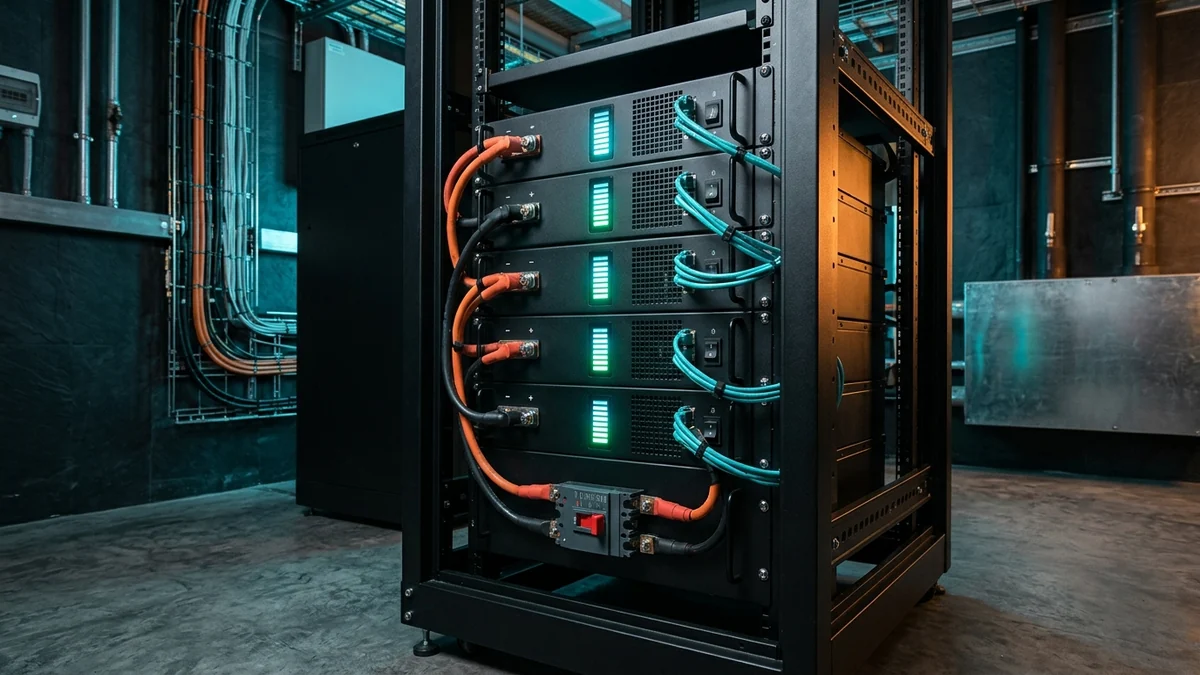
If you have been following the European and British energy markets today, you have undoubtedly seen aggressive social media campaigns promoting dynamic wholesale electricity tariffs—most notably Pstryk.pl (and dynamic TGE day-ahead contracts from major OSD suppliers) in Poland, and Octopus Agile / Intelligent Octopus Go in the United Kingdom.
The marketing pitch sounds irresistible: "Buy electricity at wholesale market prices! Charge your home at rock-bottom or negative wholesale rates when the wind blows or the sun shines!" Yet within three months of switching, thousands of ordinary families without a battery storage bank discover a painful reality: their winter bills are higher than on a standard fixed tariff, and their family life has been hijacked by a smartphone price-tracking app.
The 16:30–21:00 Evening Peak Trap
Without a battery bank, you buy electricity exactly when you live in your home (16:30–21:00)—precisely when dynamic spot prices spike to 2x–3.5x your standard fixed tariff! Checking an app before cooking dinner or boiling a kettle is not smart home automation; it is energy poverty.
Automated 24/7 Tariff & Solar Arbitrage
With a 10–15 kWh 51.2V LiFePO4 bank, your hybrid inverter charges automatically at 02:00–04:30 AM in winter at rock-bottom rates (or 100% free from solar in summer) and powers your entire house from the battery between 16:00 and 22:00—buying 0 Watts at peak price!
Why 51.2V Rack Storage Wins
Touch-safe <60V DC SELV voltage, non-flammable LiFePO4 chemistry (6,000–8,000 cycles), zero vendor lock-in, and effortless parallel expansion on M8 copper busbars using standard CAN-Bus (500 kbps) Pylon protocol.
1. Dynamic Energy Tariffs (Pstryk.pl in Poland & Octopus Agile / Go in the UK): The Brutal Math & Why They Are NOT for Everyone
To understand when a dynamic tariff is a goldmine and when it is a financial trap, we must look at the actual hourly curve of the wholesale electricity exchange (TGE — Towarowa Giełda Energii in Poland and EPEX SPOT / Nord Pool in the UK) alongside how a real human household consumes electricity.
🪤 Why a Household WITHOUT a Battery Bank Loses Money on Dynamic Tariffs (Pstryk / Octopus Agile)
On a dynamic tariff, the flat retail price per kWh is replaced by 24 hourly (or 96 fifteen-minute / 48 thirty-minute) spot prices published the afternoon before, plus the broker's commercial margin/monthly subscription (e.g., Pstryk handler fee) and full utility distribution fees. Look at when electricity is cheap vs when your family actually uses it:
- Window 1 — The 01:30 AM to 04:30 AM Night Trough: Everyone is asleep, factories are idle, and wind turbines are spinning. Spot prices drop by
70%–90%(down to a tiny fraction of daytime rates). Question: Are you going to wake up at 02:30 AM on a Tuesday to iron shirts, bake a lasagna, and blow-dry your hair? No. - Window 2 — The 11:00 AM to 02:30 PM Sunny Sunday Dip (April–August): Wholesale prices drop to
0.00or go negative for 3 hours at noon. Question: If you already have rooftop solar panels, your own roof is already producing free power at 12:30 PM—so cheap midday grid power gives you zero benefit! And on weekdays between 10:00 and 15:00, most families are at work and school. - Window 3 — The 16:30 to 21:00 Evening Peak Ambush (
Dolina Szczytowa): Between 16:30 and 21:00, solar generation drops to zero across the entire country while millions of households simultaneously turn on3,500Winduction hobs, ovens, kettles, dishwashers, heat pumps, TVs, and gaming PCs. Coal and expensive peaking gas turbines must ramp up on the grid, sending dynamic spot prices soaring to2.0x – 3.5x+the standard fixed tariff (enter your own rates in the interactive calculator below)! - The Fixed Handler & Smart Meter Overhead: On top of peak evening energy spikes, dynamic tariffs charge monthly commercial handling fees, require a certified smart meter (
Licznik zdalnego odczytu LZO), and still bill you full peak distribution fees in the evening. Without a physical battery to time-shift electrons by 12 hours, a normal working family ends up paying more than on a simple fixedG11or weekend/nightG12wtariff!
🚀 How a 10–15 kWh LiFePO4 Bank + Hybrid Inverter Turns Dynamic (or G12w / Octopus Go) Tariffs into a 365-Day Profit Engine
The moment you bolt a 10 kWh to 15 kWh (51.2V) LiFePO4 battery bank onto your Hybrid Inverter, the entire equation flips in your favour across all four seasons:
- March to October (Solar Self-Sufficiency): Your rooftop solar panels charge the
51.2V LiFePO4bank to100% SoCby early afternoon (instead of gifting energy to the grid for pennies on RCE/SEG). When the expensive16:30–21:00evening peak arrives, your hybrid inverter powers the induction hob, oven, washing machine, and servers 100% from your battery. Your grid import from March to October drops close to0 kWh! - November to February (Winter Night-Window Grid Arbitrage via 6-Slot
ToU): In deep winter when solar yield is low, you configure the hybrid inverter's built-in 6-Slot Time-of-Use (ToU) Schedule (or automate it via Home Assistant / Solar Assistant). Between 01:30 AM and 04:30 AM—when dynamic prices onPstryk/Octopus Agileor night rates onG12w/Intelligent Octopus Godrop by70%–90%—the inverter automatically charges your15 kWh LiFePO4bank from the grid at3,000W–5,000W. Then, all day and throughout the brutal16:00–22:00evening peak, your home runs strictly off those cheap night electrons stored in your battery!
2. Low-Voltage 51.2V (16S LiFePO4) vs High-Voltage (200V–600V HV) Battery Banks: Why 51.2V Is the Engineering Gold Standard
When shopping for a home or business energy storage bank, you will encounter two competing electrical architectures: Low-Voltage (48V / 51.2V Nominal) and High-Voltage (150V to 600V DC). Why do independent power electronics engineers, off-grid architects, and homelab builders overwhelmingly choose 51.2V (16S) LiFePO4?
- The Chemistry & Cell Math (
16S × 3.2V = 51.2V Nominal): Unlike volatile cobalt-basedNMC / NCAEV pouch cells that can enter thermal runaway if punctured, Lithium Iron Phosphate (LiFePO4 / LFP) uses a crystal olivine phosphate cathode bond that is chemically non-flammable and delivers6,000 to 8,000 deep cyclesat80% Depth of Discharge (DoD)—translating to 15 to 20 years of daily cycling. Sixteen prismatic cells (such as Grade-AEVE LF280K / LF304 / MB31orPylontechmodules) wired in series (16S) produce a nominal voltage of51.2V DCand a full-charge absorption voltage of55.2V–56.8V DC. (Note: older15S = 48.0VPylontech US2000C/US3000C/US5000 modules are also universally supported on the same 48V inverter bus). - Touch-Safe
<60V DC SELVVoltage vs Lethal400V DCHV Arcs: Under international electrical safety standards (IEC 60364 / BS 7671), DC voltages below60V DCare classified as Separated Extra-Low Voltage (SELV)—meaning touching a51.2Vterminal with dry hands cannot drive lethal ventricular fibrillation current through the human body. By contrast, a400V DCHigh-Voltage battery stack carries lethal electrocution and sustained plasma arc-flash danger at all times. - Zero Vendor Lock-In & Parallel Busbar Redundancy: In a
400V HVbattery tower, multiple modules are wired in series: if a single cell in one module degrades or fails after 4 years, the entire400Vstack shuts down, and you are locked into buying the exact same proprietary module from the original manufacturer at inflated prices. In a51.2VLow-Voltage rack bank, every5 kWhor15 kWhbattery pack is wired in parallel across a common copper busbar (such as theVictron Lynx Distributor). If one pack ever needs maintenance, you flip its breaker off and your house keeps running on the remaining parallel packs—and you can add new51.2Vpacks years later without capacity bottlenecks!
3. Connecting the 51.2V LiFePO4 Bank to Your Hybrid Inverter: Closed-Loop CAN-Bus / RS485, RJ45 Pinouts & 200A DC Protection
Connecting a high-capacity lithium battery bank to a hybrid inverter requires precision across both the digital BMS data layer and the high-current DC copper layer. Never cut corners on either:
🔌 Why You Must NEVER Run LiFePO4 in "Dumb Lead-Acid Voltage Mode" (Closed-Loop CAN-Bus Explained)
Some installers who cannot get the BMS communication cable working lazily switch the hybrid inverter to "Lead-Acid / User Voltage Mode" and type in bulk/cutoff voltages. Never accept this!
- The Flat LFP Voltage Curve Problem: A lead-acid battery's voltage drops linearly as it discharges, making voltage a decent proxy for capacity. A
LiFePO4cell, however, has a razor-flat voltage plateau between20% SoC and 90% SoC(hovering between3.28V and 3.33Vper cell). In voltage mode, your inverter has no idea whether the battery is at32%or82%! - What Closed-Loop
CAN-Bus (500 kbps)/RS485Does: When you connect the RJ45 BMS cable and selectLithium Mode 00 (Pylon / Deye CAN Protocol), the battery's internal Battery Management System (BMS) takes complete digital command of the inverter. Every second, the BMS broadcasts exact Coulomb-countedSoC (%), pack temperature, and dynamic Charge Current Limit (CCL). As the cells approach98% SoC, the BMS smoothly tells the inverter to taper charging current down to10A → 5Aso the internal active/passive balancer can equalize all 16 cells without triggering a single-cell overvoltage disconnect (>3.65V), and blocks charging completely if garage temperature drops below0°C(preventing permanent lithium plating on the anode).
High-Current DC Protection: 125A–250A DC MCCB, NH00 Fuses & Diagonal Busbar Wiring
At 51.2V DC, delivering 8,000W of AC power requires 165 Amps of continuous DC current (8000W / 51.2V / 0.94 eff = 166A), and a short-circuit across a 280Ah LiFePO4 bank can dump 4,000 to 8,000 Amps in milliseconds. Follow these four non-negotiable DC wiring standards:
- Mandatory High-Breaking-Capacity Main DC Breaker / Fuse (
>20 kA Icu): Between your51.2Vbattery busbar and the hybrid inverter's battery terminals, install either a heavy-duty160A / 200A / 250A 500V DC Moulded Case Circuit Breaker (DC MCCB)with magnetic arc chutes, an industrialNH00knife-blade fuse switch-disconnector, or a Class-T / Mega fuse inside aVictron Lynx Distributor. Never use cheap automotive 12V car-audio resettable breakers—they explode under a 51.2V LFP fault! - Pure Copper Welding/Battery Cable Sizing (
35mm² / 50mm² / 70mm²): For a5 kWinverter (~100A DC), use at least35mm²fine-stranded flexible pure copper cable (H01N2-D). For an8 kW – 12 kWinverter (160A–240A DC), step up to50mm²or70mm²pure copper (or double2×35mm²runs) crimped with heavy-walled tinned copperM8tube lugs using a hexagonal hydraulic crimper. - Diagonal ("Take-Off") Parallel Busbar Wiring: When connecting 2, 3, or 4 battery modules in parallel, every battery module's positive and negative cable to the copper busbar MUST be the exact same length (e.g., all exactly
1.0m). Or if daisy-chaining rack batteries, connect the main inverter Positive lead to Battery #1 (top of stack) and the main inverter Negative lead to Battery #N (bottom of stack) so every electron travels through an identical total length of copper—preventing Battery #1 from doing 60% of the work while Battery #4 sits idle!
4. Configuring the 6-Slot Time-of-Use (ToU) Schedule for Automated Winter & Summer Arbitrage
How do you make your hybrid inverter and 51.2V LiFePO4 battery bank execute this strategy automatically without you ever touching a phone app? Both the Deye SUN-SG04LP3 (via its 6-slot Time of Use table) and Victron MultiPlus-II (via Dynamic ESS / Scheduled Charge Levels in Cerbo GX) divide the 24-hour day into programmable State-of-Charge (SoC %) and Grid-Charging windows:
⏰ Recommended 6-Slot Time-of-Use (ToU) Matrix for Hybrid Inverters (Winter & Summer)
- Slot 1 (
01:00 – 05:00 AM) — Night Trough Grid Charge Window: CheckGrid Charge = ON. Set targetSoC = 85%–95%in Winter (November–February) so the inverter fills the51.2V LiFePO4bank from cheap 02:00 AM dynamic spot rates (Pstryk/Octopus Agile) or fixed off-peak rates (G12w/Intelligent Octopus Go). In Summer (April–September), lower this night target toSoC = 25%–30%so the battery leaves 70%+ empty room to absorb free morning sunshine! - Slot 2 (
05:00 – 09:00 AM) — Morning Peak Discharge: UncheckGrid Charge = OFF, set minimumSoC = 20%. The battery powers morning breakfasts, coffee machines, showers, and computers while morning grid prices are high, and your East roof MPPT string begins recharging the bank. - Slot 3 & 4 (
09:00 AM – 04:00 PM) — Midday Solar Harvest & Pre-Peak Top-Up: Solar PV charges theLiFePO4bank up to100% SoCwhile Zero-Export to CT feeds daytime home loads. (Optional in dark December weather: if midday dynamic price dips at13:00–15:00before the evening spike, allow a secondary grid top-up to90% SoC). - Slot 5 (
04:00 PM – 10:00 PM) — Evening Peak Shield (16:00–22:00): UncheckGrid Charge = OFF, set minimumSoC = 15%–20%. Your house runs 100% off the51.2V LiFePO4battery bank throughout the most expensive 6 hours of the day—buying0 Wattsfrom the grid while evening spot prices spike to2x–3xthe baseline tariff! - Slot 6 (
10:00 PM – 01:00 AM) — Late Night Standby: Battery sustains baseload servers, routers, and fridges down to the20% SoCEPS blackout reserve until the 01:00 AM cheap window opens again.
🧮 Interactive 51.2V LiFePO4 Bank Sizer & Dynamic Tariff (Pstryk / Octopus) Peak-Trap Simulator
PEAK-TRAP AUDITOR • 51.2V DC CABLE & MCCB SIZER • CAN-BUS PINOUT
Select your country/tariff model, evening peak electricity consumption (16:00–22:00), 51.2V LiFePO4 battery capacity (try selecting 0 kWh [No Battery] to see the Dynamic Tariff Evening Peak Trap!), and solar array size below:
5. 51.2V LiFePO4 Rack Batteries, Copper Busbars, DC MCCBs & BMS Hubs Matrix (Amazon UK)
Use our interactive comparator below to filter between 48V / 51.2V LiFePO4 Server-Rack Batteries, Victron Lynx M8 Copper Busbars & 200A–250A DC MCCB Breakers, 35mm² / 50mm² Pure Copper Battery Cables, and BMS Telemetry Hubs:
📊 51.2V LiFePO4 Storage, Busbar & DC Overcurrent Protection Matrix
| Hardware Component & Model | Voltage / Capacity / Rating | BMS / Protection Spec | Why Engineers Specify It | Best Application | Check Availability |
|---|---|---|---|---|---|
| Pylontech US5000 (4.8 kWh) & US3000C (3.55 kWh) 48V LiFePO4 Rack Module Industry-Standard 19" Server-Rack Lithium Modules with Native CAN/RS485 BMS |
48V LFP (100Ah / 74Ah)6,000–8,000 Cycles @ 90% DoD |
Dual RJ45 CAN-Bus (500k) +RS485 + Soft-Start Pre-Charge |
Plug-and-play native protocol support on Deye, Victron, Sofar, Solis & Growatt; parallel up to 16 units | Modular Residential & Homelab 5–30 kWh Storage Racks | View on Amazon ↗ |
| 51.2V 100Ah (5.12 kWh) & 280Ah/300Ah (15 kWh) 16S LiFePO4 Server Rack / Wall Battery Full 16-Cell Prismatic Grade-A LiFePO4 Packs with 100A–200A Pace/Seplos CAN BMS |
51.2V Nominal (16S)5.12 kWh or 15.36 kWh |
Built-in 100A/200A BMS +Front DC Breaker & LCD Screen |
Lowest £/kWh and PLN/kWh capital cost; full 16S voltage reduces inverter DC current by 6.5% vs 15S | High-Capacity Whole-House Solar & Winter ToU Arbitrage | View on Amazon ↗ |
| Victron Energy Lynx Distributor & Lynx Power In (1000A M8 Copper Busbar) Modular Tinned-Copper DC Distribution Busbar with Individual Mega-Fuse Holders |
1000A Continuous DC 4× Fused M8 Battery Bays |
Individual 58V/70V DC Mega-Fuses+ Blown-Fuse LED Indicators |
Ensures equal resistance parallel wiring for up to 4 battery stacks + SmartSolar MPPT + Hybrid Inverter | Parallel Wiring of 2 to 8× 48V/51.2V LiFePO4 Modules | View on Amazon ↗ |
| 200A / 250A / 160A 2-Pole 500V DC MCCB Moulded Case Battery Breaker Heavy-Duty High-Breaking-Capacity (>20kA) Main Battery Isolator & Short-Circuit Breaker |
125A / 160A / 200A / 250A500V DC Industrial Frame |
>20 kA DC Arc Chute Thermal + Magnetic Trip |
Safely interrupts massive 5,000A LiFePO4 short-circuit currents and isolates inverter DC capacitors | Main DC Disconnect Between Busbar & Hybrid Inverter | View on Amazon ↗ |
| 35mm² & 50mm² Pure Copper Flexible Battery Cables with M8 Crimped Lugs Fine-Stranded H01N2-D Welding/Battery Copper Leads (Red + Black Equal Length Pairs) |
35mm² (150A) or50mm² (220A) Pure Copper |
Heavy-Duty Tinned M8 Lugs+ Adhesive Heat-Shrink Sleeve |
Eliminates voltage drop and terminal heating during 5,000W–10,000W discharge; pre-cut equal lengths | Connecting 51.2V Batteries to Busbar, MCCB & Inverter | View on Amazon ↗ |
| 10-Ton Hydraulic Cable Lug Crimper (4mm²–70mm²) & Tinned Copper M8 Lugs Hexagonal Die Hydraulic Press for Custom Equal-Length 35mm²/50mm² Busbar Leads |
4mm² to 70mm² Hex Dies10-Ton Cold-Weld Force |
Creates Zero-Void Hexagonal Cold-Weld on M8 Tube Lugs |
Lets you fabricate custom equal-length 35mm²/50mm² copper battery interconnects with <0.1mΩ resistance | DIY 16S LiFePO4 Rack Builders & Busbar Installations | View on Amazon ↗ |
| Victron Cerbo GX MK2 & GX Touch 50 / 70 Telemetry & Dynamic ESS Controller Dual CAN-Bus BMS Gateway, VRM Portal, Modbus-TCP & Automated Dynamic Tariff Engine |
2× Independent CAN-Bus( BMS-Can 500k + VE.Can) |
Native Pylontech/Seplos DVCC + Dynamic ESS Spot-Price Auto-ToU |
Bridges 51.2V BMS CAN-Bus directly to MultiPlus-II, SmartSolar MPPTs, and Home Assistant via MQTT/Modbus | Central Brain for Victron & Multi-MPPT Hybrid Systems | View on Amazon ↗ |
| 19-Inch Heavy-Duty 12U–18U Server Rack Cabinet (600×600mm) & Cantilever Shelves Steel Enclosure Rated for 40kg–50kg 48V/51.2V LiFePO4 Battery Modules |
19-Inch Standard Width600mm Deep Steel Frame |
Lockable Vented Mesh Door + Heavy-Duty Support Rails |
Safely houses 2 to 5× Pylontech US3000C/US5000 or 51.2V 100Ah rack batteries off cold garage floors | Garage, Plant Room & Homelab Battery Rack Installations | View on Amazon ↗ |
6. In-Depth Hardware Spotlights: The 6 Best Components for a 51.2V LiFePO4 Storage & Dynamic Tariff Build
Pylontech US5000 (4.8 kWh) / US3000C (3.55 kWh) & 51.2V 100Ah (5.12 kWh) Server-Rack LiFePO4
There is a reason why the Pylontech US3000C / US5000 (and 16S 51.2V 100Ah server-rack modules using the Pylon CAN protocol) became the de-facto global standard for hybrid solar storage: every major hybrid inverter on earth (Deye, Victron, Sofar, Solis, GoodWe, Growatt, LuxPower) speaks Pylontech CAN-Bus natively out of the box. Each module features an internal pre-charge resistor circuit (which prevents a massive spark when charging the hybrid inverter's internal DC bus capacitors on startup), dual high-current Amphenol SurLok or M8 terminals, and automatic master-slave RJ45 addressing (Link Port 0 / Link Port 1). You can start with 5 kWh or 10 kWh today and slide an extra module into your 19-inch rack next winter in 10 minutes.
Victron Energy Lynx Distributor & Lynx Power In (1000A Tinned Copper M8 Busbar System)
Never stack four lug terminals on top of a single inverter bolt—that creates high contact resistance and uneven current sharing. When combining 2, 3, or 4 parallel 51.2V LiFePO4 battery modules alongside an inverter and an external Victron SmartSolar MPPT controller, wire every component with equal-length copper cables into a Victron Lynx Distributor (or Lynx Power In modified with M8 bolts for Mega fuses). It houses two massive positive and negative tinned copper bars inside a Finger-Safe IP22 enclosure with four individually fused M8 branch connections. Pro Engineering Tip: For a 51.2V (16S) bank charging to 56.8V, always populate the Lynx with 58V DC or 70V DC rated Mega-fuses (not standard 32V automotive fuses!).
160A / 200A / 250A 2-Pole 500V DC MCCB Moulded Case Circuit Breaker & Enclosure
Because a 15 kWh – 30 kWh LiFePO4 battery bank has an internal resistance of just a few milliohms (<3 mΩ), an accidental wrench drop or inverter IGBT short-circuit can unleash 5,000+ Amps of DC fault current. Standard DIN-rail miniature breakers (6 kA MCB) will weld their contacts shut under that fault. Between your battery bank/busbar and the hybrid inverter, always install a heavy-duty 2-Pole 160A–250A 500V DC MCCB (Moulded Case Circuit Breaker) inside a dedicated wall enclosure (or an industrial NH00 fuse disconnector). It provides both catastrophic short-circuit interruption and a safe, physical single-lever disconnect whenever you service the system.
35mm² & 50mm² Fine-Stranded Pure Copper Battery Cables with Heavy-Duty M8 Lugs
Critical Buyer Warning: When buying thick battery leads online, watch out for cheap listings that sell CCA (Copper-Clad Aluminum) disguised as battery cable—aluminum has 60% higher resistance than copper and creeps under M8 bolt torque, causing glowing-hot terminals! Always specify 100% Pure Oxygen-Free Copper (OFC / H01N2-D welding cable) in 35mm² (for up to 125A / 5 kW inverters) or 50mm²–70mm² (for 160A–240A / 8–12 kW 3-phase inverters), with identical lengths on both red and black conductors.
Victron Cerbo GX MK2 Telemetry Hub (or Raspberry Pi + RS485/CAN Solar Assistant)
In a Victron system, the Cerbo GX MK2 is the central nervous system that links your 51.2V LiFePO4 battery's CAN-Bus BMS (Pin 7/8 BMS-Can) with your MultiPlus-II inverter and SmartSolar MPPT controllers via DVCC (Distributed Voltage and Current Control)—while exposing every single cell metric locally over Modbus-TCP and MQTT to Home Assistant. And if you run a Deye, Sofar, or Voltronic hybrid inverter, pairing a dedicated Raspberry Pi 4/5 with an isolated USB-to-RS485/CAN adapter (running Solar Assistant or ESPHome Deye Modbus) bypasses slow cloud dongles (which only update every 5 minutes) and gives you 1-second real-time local telemetry to automate dynamic tariff charging on Pstryk.pl or Octopus Agile!
19-Inch Heavy-Duty 12U–18U Server Rack Cabinet (600×600mm) for 48V/51.2V Battery Modules
A single 5 kWh (51.2V 100Ah) LiFePO4 module weighs 36 kg to 45 kg, meaning a 15 kWh bank weighs over 130 kg! Never stack lithium batteries directly on a cold, damp concrete garage floor: concrete acts as a massive thermal heat sink in winter, pulling cell temperature down toward 0°C (at which point the BMS throttles or locks out charging to prevent lithium plating). Mounting your modules inside a 600×600mm 19-inch heavy-duty steel rack cabinet on L-angle support rails elevates the bank off the cold floor, retains the gentle internal warmth generated during charging, and locks high-current DC busbars safely behind a keyed door.
🛒 Quick-Shop: Complete 51.2V LiFePO4 Battery Bank, Busbar & DC Protection Stack (Amazon UK)
Build a safe, expandable 51.2V LiFePO4 energy storage bank ready for solar self-consumption and winter dynamic tariff arbitrage:
7. Frequently Asked Questions (FAQ)
❓ Is a simpler 2-zone night tariff (G12 / G12w in Poland or Octopus Go / Intelligent Go in the UK) sometimes better than a fully dynamic spot tariff (Pstryk / Octopus Agile)?
Often, yes—especially if you want 100% predictable winter night charging costs! On a classic 2-zone night/weekend tariff (such as G12w in Poland or Intelligent Octopus Go in the UK from 23:30 to 05:30), you know with 100% certainty every single night of the winter that electricity between 23:30/22:00 and 05:30/06:00 is billed at the discounted off-peak rate—even during a windless, freezing January anticyclone (Dunkelflaute) when wholesale dynamic spot prices on Pstryk or Agile stay high all night! With a 10–15 kWh LiFePO4 battery bank, both G12w / Octopus Go and dynamic tariffs allow you to shift 100% of your daytime/evening consumption into the cheap night window.
❓ Why must LiFePO4 batteries never be charged below 0°C (32°F), even though they can discharge down to -15°C?
While a LiFePO4 battery can safely discharge (power your home) at sub-zero temperatures down to -15°C, charging a lithium iron phosphate cell when its internal electrolyte is below 0°C causes metallic lithium ions to plate onto the surface of the graphite anode instead of intercalating into the carbon lattice. That metallic lithium plating permanently destroys cell capacity and creates internal dendrites. Always keep your 51.2V LiFePO4 rack in an attached garage, utility room, or insulated cabinet above +5°C (or choose battery packs with built-in BMS silicone heating pads that warm the cells to +5°C before opening the charge MOSFET).
❓ Can I mix a new 51.2V LiFePO4 rack module in parallel with an existing bank I bought 2 years ago?
Yes—as long as both modules share the exact same cell count (16S = 51.2V with 16S, or 15S = 48.0V with 15S). Before bolting the new module onto your Victron Lynx copper busbar in parallel with your older modules, charge both the old bank and the new module individually to 100% SoC (or within 0.3V of each other, measured with a multimeter across the terminals) so there is zero inrush current between the packs when you close the breaker.